
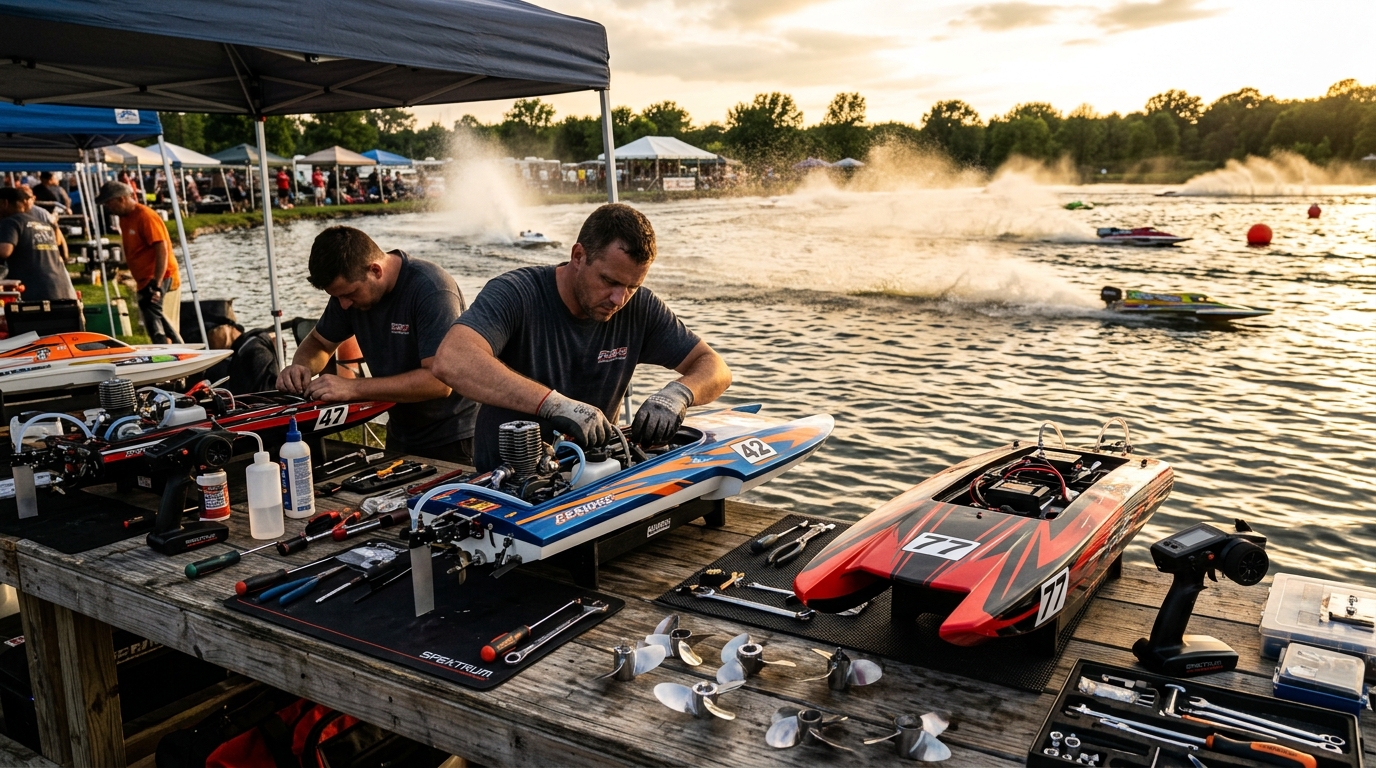

The early season always tells the truth.
Before championship points pile up and before summer heat exposes every weakness in your setup, spring events reveal who came ready and who is still sorting things out in the pits. Right now, that message is loud. The 2026 IMPBA Gas Clash is already sold out with a wait list open, and the R/C Unlimiteds season launch at the Atomic Cup showed the same energy: racers are moving, new drivers are showing up, and nobody wants to waste the first serious stretch of the season chasing preventable problems.
That matters for every gas and electric boater, whether you are running sport hydro, mono, cat, offshore, scale, or rigger. A sold-out race does not just mean excitement. It means the margin for sloppiness gets smaller. If you want to run up front, or just avoid a frustrating weekend, now is the time to treat your boat like a race package instead of a garage project.
Sold-out events reward disciplined prep
When an event like the Gas Clash fills up early, it usually means two things. First, confidence is high in the class structure and race program. Second, pit time gets more valuable because there are more serious entries and less room for chaos. Boats that arrive half-tested tend to stay half-sorted.
This is where disciplined preparation starts paying off. Go through the basics before race week, not the night before your first heat. Check linkages for slop, inspect fuel line condition, replace questionable hardware, confirm radio system health, and make sure your driveline spins clean with no hidden drag. If you are running gas, pressure-test the system and give your cooling path a hard look. If you are running electric, confirm connector health, pack balance, and consistent ESC temps across repeated runs.
The point is simple: a fast boat is great, but a repeatable boat wins more weekends.
Spares are not optional anymore
One of the clearest lessons from packed spring schedules is that racers need to think in systems, not single runs. If turnout is strong and classes are deep, the ability to recover quickly after a bad heat becomes part of race performance.
That means bringing the parts that actually stop your day when they fail. Props, flex shafts, hardware, couplers, rudder parts, turn fins, fuel tubing, ignition-related consumables, hatch tape, and the small tools you always end up borrowing should be in the box before you leave home. Too many racers spend serious money on hulls and engines, then gamble the weekend on a missing five-dollar spare.
This is also where proven hardware matters. Enforcer and Bonzi-style components earn their keep when they shorten the distance between a problem and a fix. Reliable driveline parts, solid mounting hardware, and race-ready rigging choices are not glamorous purchases, but they are often the difference between making the next round and watching it from shore.
Engine reliability is a spring advantage
With events like the Gas Clash putting gas classes front and center, reliability is already becoming a separator. Early in the season, a lot of engines are freshened, adjusted, or recently reinstalled. That is exactly when racers get tempted to chase performance before stability.
Do not make that mistake.
A strong gas program starts with clean, predictable behavior: easy starting, stable idle, steady transition, safe temps, and consistent fuel delivery over a full race distance. That is what gives you the confidence to refine prop choice and needle settings later. Whether you are working with a Zenoah-based setup or another proven marine platform, the smart move right now is to lock down the baseline and log what the boat does in changing conditions.
If the engine is telling you something, listen early. Small vibration, a creeping temp problem, a clutch issue, or inconsistent water flow in April becomes a full weekend killer in May.
New-driver energy raises the whole field
The Atomic Cup kickoff also highlighted something healthy for the hobby: new boat info and new driver info were part of the conversation. That is good news. More fresh blood means stronger classes, better local scenes, and more reasons for manufacturers and shops to keep supporting the category.
But it also means experienced racers should expect the field to sharpen quickly. New drivers today often arrive with better access to setup knowledge, more video, more online community advice, and faster parts sourcing than ever before. If you have been around a while, the answer is not nostalgia. It is execution.
This is a great moment to tighten your own notebook, simplify your setup process, and show newer racers what a well-run program looks like. Strong clubs and strong race weekends are built that way.
What to do before your next event
If you are racing in the next two weeks, here is the practical play:
- Run the boat enough times to confirm repeatability, not just top speed.
- Build a real spares kit around the failures that actually end race days.
- Inspect cooling, driveline, and radio systems with zero optimism.
- Choose proven hardware over experimental shortcuts.
- Write down setup changes so you are not tuning from memory in the pits.
The season is awake now. Sold-out races, busy pits, and early momentum are telling the same story: preparation is becoming a competitive edge again. For serious RC boat racers, that is not bad news. That is the fun part.
If your program is tight, the next few weeks are where it starts to show.