
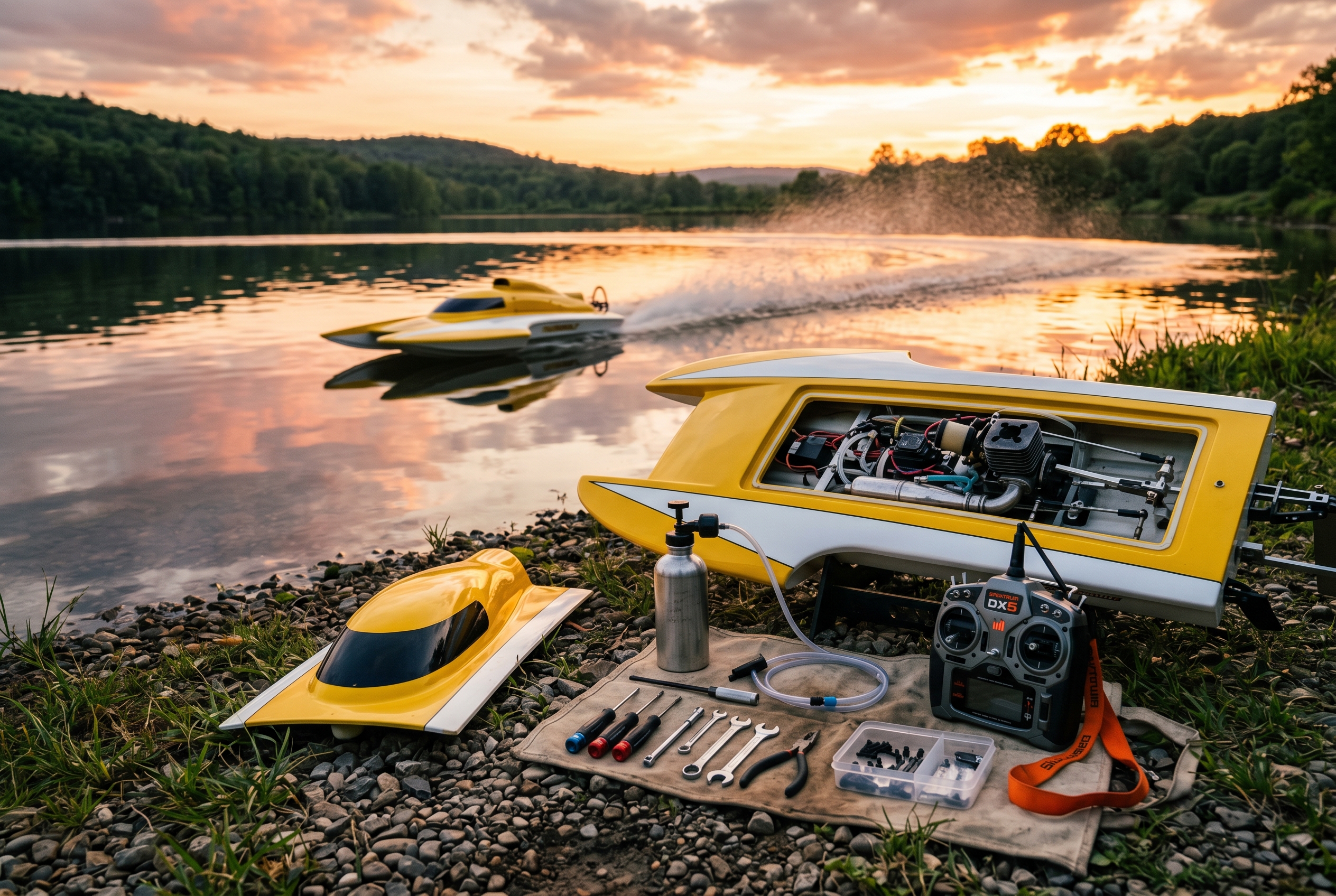

A practical guide to getting a fiberglass gas hydro on the water, avoiding beginner mistakes, and building a setup that stays fast, stable, and fun to drive.
If you want a gas hydro that delivers the classic RC boat experience of speed, sound, and spray, the Enforcer Stingray Hydro – ready to run is an appealing place to start. It gives you a durable fiberglass platform and a custom-built RTR foundation, which means you can spend less time sourcing parts and more time learning how to make a hydro run cleanly.
That said, a hydroplane is not a point-and-shoot hull. The Stingray rewards careful setup, smooth driving, and a little patience during the first few outings. Here is how to approach it so your first sessions are productive instead of frustrating.
1. Start with a full once-over before the first launch
Even with a ready-to-run boat, do not assume every detail is exactly where you want it. Before you fuel up, give the Stingray a complete inspection. Check all visible hardware, make sure the radio box is sealed, confirm the steering linkage moves freely, and verify that the driveline turns smoothly without binding. Look closely at the strut, rudder, turn fin, and prop hardware for anything loose from shipping or handling.
This is also the right time to make sure your batteries are fresh, your fail-safe works properly, and your hatch seals securely. Hydros are happiest when little problems are caught on the bench instead of discovered at speed.
2. Focus on stability before top speed
The biggest mistake new hydro owners make is chasing maximum speed immediately. Resist that urge. Your first goal is a boat that launches cleanly, tracks straight, corners predictably, and comes back dry and intact. If the Stingray feels calm and repeatable, speed will come naturally from tuning.
Make your first runs short. Watch how the hull rides, especially whether it feels planted or starts carrying the nose too high. A hydro that gets too light in the front can become unpredictable fast. A stable setup is always the better starting point.
3. Pay attention to strut, rudder, and turn-fin baseline
On any gas hydro, running attitude is everything. The strut angle and depth influence how the boat carries the hull, the rudder affects tracking and corner feel, and the turn fin helps the boat hold a line in turns. If the Stingray is behaving well, resist the temptation to make big changes all at once. Small adjustments are the rule.
A good practice is to change one variable at a time and test methodically. If you move the strut and swap props and tweak steering travel all in one session, you will have no idea what actually helped. Keep notes after every run. It sounds old-school, but it saves time and broken hardware.
4. Be smart with engine break-in and carb tuning
Gas RTR boats live or die by how they are treated early. If your Stingray is running a Zenoah-based setup, give the engine a proper warm-up and avoid leaning it out aggressively just to chase RPM. A slightly rich, healthy engine that runs cool is far better than a crisp-sounding setup that is one bad pass away from trouble.
Pay attention to throttle response, idle quality, and engine temperature behavior. If it hesitates badly off the bottom, loads up excessively, or feels strained at the top end, stop and evaluate instead of forcing more passes. Reliable tuning wins more lake days than hero tuning ever will.
5. Protect the driveline and fuel system
Two areas deserve extra respect on any gas boat: the flex shaft system and the fuel system. Keep the driveline maintained, lubricated, and checked for wear. On the fuel side, inspect lines regularly, make sure the tank plumbing is secure, and replace questionable tubing before it becomes an on-water mystery problem.
If the boat ever starts acting inconsistent from one pass to the next, do not just blame the carb needles. Fuel delivery, shaft condition, and loose hardware can create symptoms that look like tuning problems but are really mechanical issues.
6. Use practice sessions to learn the hull
The Stingray Hydro is the kind of boat that gets better as the driver gets better. Spend time learning launch technique, throttle discipline, and how the hull reacts in wide versus tight turns. A smooth hydro driver usually ends the day with a faster boat than the driver who is constantly over-correcting and hammering the throttle.
Think of the first several outings as setup and data days. You are building a reference point for prop choice, water conditions, ride attitude, and engine behavior. Once that baseline is established, upgrades and tweaks become much more meaningful.
7. Build your pit box now, not after a problem
If you are serious about enjoying a gas hydro, keep a small support kit ready. Basic tools, extra prop hardware, fuel tubing, collets, driveline grease, radio batteries, and a few common spare parts can turn a short frustrating day into a full afternoon of running. Enforcer owners who stay prepared tend to stay on the water longer.
Final thought
The Enforcer Stingray Hydro – ready to run is a strong entry into gas hydro boating because it gives you a serious fiberglass platform with the personality serious RC boaters actually want. Treat it like a real performance machine, not a toy. Inspect it carefully, tune it patiently, and make changes in small steps. Do that, and the Stingray can become the kind of boat you look forward to running every chance you get.
If you already run a Stingray or another Enforcer hydro, share your favorite setup tip or first-run lesson in the comments. Those practical details are what help the whole RC boating community get faster and smarter together.