
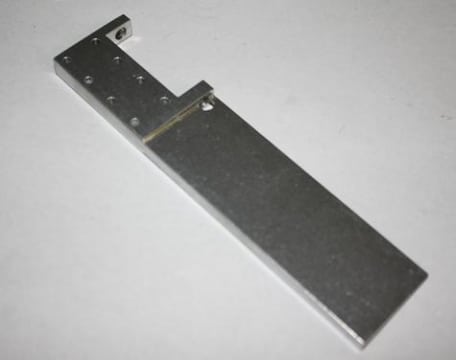

Your Rudder Is Not Set-and-Forget
Most guys bolt on the rudder, run straight down the course, and call it done. That’s a mistake. The rudder and trim tab are the most overlooked performance controls on a gas RC boat. Get them wrong and you bleed speed everywhere. Get them right and you unlock handling precision that makes everything else feel sharper. This isn’t cosmetic. This is competitive.
What the Trim Tab Actually Does
The trim tab controls bow attitude. Period. Tilt it down and the bow lifts. Too much bow lift and you’re porpoising — bouncing down the course burning energy instead of making speed. Tilt it up and you push the bow down. Too much and you’re plowing water, fighting the hull. The sweet spot is a clean, level plane with the bow just kissing the surface. That’s where your top speed lives. That’s where your hull is efficient.
Start flat. Run a straight heat. Watch the wake. If the hull is bouncing, add a little nose-down trim. If she’s digging and spraying wide, lift it. Make one adjustment at a time. Small changes matter. A two-degree shift in trim can make or break your lap times.
Rudder Geometry Is a Speed Weapon
Most drivers think of the rudder as a steering device. It is. But it’s also a drag source. A rudder angled slightly off-center is constantly working against you. Even one degree of toe creates resistance. Before every session, check your neutral position. The rudder should be dead straight at center stick. If it’s not, your servo trim or linkage needs adjustment. Fix it before you hit the water.
Rudder size matters too. A bigger blade gives you more bite in corners. Useful in tight courses. But it also adds drag. For long straight courses and open water, a narrower blade is faster overall. Match your rudder to the course, not to habit. Think about what you’re racing, not what came in the box.
Alignment Sets the Foundation
Before you tune anything, align everything. The rudder shaft needs to run true — no side load, no binding. The cable connection to your servo must be direct and stiff. Sloppy linkages mean delayed steering response. In racing, delay is death. Check for flex in the cable guide. Check for slop in the servo arm holes. Replace what’s worn. A ten-cent o-ring or a new servo arm can recover half a second per lap. That’s a race won or lost.
The stuffing box where the rudder exits the hull should be sealed and tight. Water intrusion there creates drag and turbulence. Grease it properly. Check it every few sessions. Consistent maintenance is what separates the guys who win from the guys who wonder why they don’t.
Tune It, Race It, Repeat
Rudder and trim setup is an ongoing process. Conditions change. Water temperature changes. Hull loading changes. What worked in March needs revisiting in July. Keep notes. Date your setups. Know what you changed and what it did. Build your own data. That’s how you develop an edge that compounds over a full racing season.
The guys on the podium aren’t lucky. They’re dialed in. They’ve tested more, adjusted more, and paid attention to the details everyone else ignores. Rudder and trim tab tuning is exactly that kind of detail. Master it.
Ready to Run Harder?
Enforcer RC Boats carries the rudder hardware, trim tabs, and servo linkage components built for serious competition. Find what you need at enforcerrcboats.com or call us direct at 317-844-4695. We know what wins. We stock what wins.