

The Prop Is Your Connection to the Water
Everything your engine produces has to go through the propeller. That means the prop is not a detail — it is the whole conversation. Pick the wrong one and you leave speed on the table. Pick the right one and the boat does exactly what you built it to do.
Prop selection is one of the most impactful tuning moves you can make on a gas RC boat. It costs less than most parts. It takes minutes to swap. And it changes everything about how the boat feels and performs.
Diameter and Pitch: Know What You’re Choosing
Two numbers define every prop: diameter and pitch. Diameter is the measurement across the full sweep of the blades. Pitch is the theoretical forward distance traveled in one full rotation. A higher pitch prop moves more water per revolution. A lower pitch prop spins up faster and generates more thrust off the line.
For gas-powered hulls, matching prop pitch to your engine’s powerband is critical. If your engine peaks early and your pitch is too high, you never get into the powerband. If pitch is too low, you over-rev and sacrifice top speed. The goal is to hit your peak RPM right at wide-open throttle with the prop loaded under real water conditions.
Matching the Prop to Your Hull
Hull type matters here. A deep-V hull sits deeper in the water and loads the prop differently than a cat or a tunnel. Monoplanes and hydros run high up on the water surface, reducing drag and allowing a higher pitch. Know your hull’s running angle before you settle on a prop.
Heavier boats need more thrust. That usually means a larger diameter with moderate pitch. Lighter, faster hulls can handle more pitch once they’re up on plane. Start conservative and work up. Going too aggressive on pitch too fast is how you lug an engine and ruin a run.
Cupping, Rake, and Blade Count
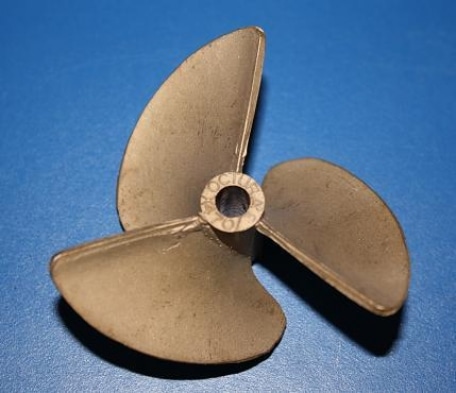
Beyond diameter and pitch, blade geometry matters. Cupping — the curve at the trailing edge of the blade — adds bite and can reduce cavitation at high speed. More rake angles the blade back, which helps at speed in surface-piercing applications. A three-blade prop generally delivers more thrust and smoother power. A two-blade cuts drag and can extend top-end RPM if your powerplant supports it.
Most serious gas RC boaters run three-blade brass or stainless props. They hold up to impact better and maintain balance longer than softer materials. If you’re racing, carry spares. Prop strikes happen. A bent blade throws vibration through the entire driveline.
Tuning Is Iterative
There is no universal right answer. Prop tuning is a process. Run. Log your RPM. Check your top speed. Swap. Run again. Small changes in pitch — half a pitch up or down — can shift your numbers noticeably. Keep notes. The combination that works on a calm day may not be optimal in chop or after a hull modification.
The racers who win are the ones who show up with three props and know why each one is in the bag.
Ready to Run Harder?
Enforcer RC Boats stocks a full selection of props, struts, and drive hardware to match any hull and powerplant combination. We know what works. Visit enforcerrcboats.com or call us at 317-844-4695 and we will help you find the right wheel for your setup.