

The Most Overlooked Part of a Fast Setup
You can have the right hull, a dialed carburetor, and a tuned pipe that’s singing — and still run slow if your drive cable is misaligned. Drive cable setup is one of those jobs that separates builders who’ve been around the block from guys still chasing gremlins after every heat. Get it right once, understand why it matters, and your boat will reward you with faster runs and longer intervals between repairs.
Angle Is Everything
Drive cables don’t like working at sharp angles. A cable running at more than a couple degrees off-axis from the strut will shed speed, generate heat at the flex tube, and wear out fast — sometimes catastrophically fast if the strut angle is way off. The goal is the straightest possible run from the engine’s drive coupler to the strut exit, with minimal flex tube bending in between. When you’re fitting the cable, lay the hull level, seat the strut at its final position, and check the exit angle with a straightedge before you commit to anything. If the line isn’t clean, adjust the strut position or the motor mount angle before you move on — not after everything’s bonded in.
Flex Tube: Support It or Lose It
The outer flex tube carries as much responsibility as the cable itself. It needs to be anchored firmly at both ends — at the motor mount coupler and inside the strut — with no long unsupported spans where it can flex and whip under load. Running the flex tube through a dedicated guide or bonding it tight to a thru-hull fitting keeps it locked in line at speed. Loose flex tubing is a vibration amplifier. Every inch of unsupported tube transmits slop into the drivetrain and eats into your propeller efficiency. Fix it on the bench and it won’t bite you on the water.
When to Replace, Not Inspect
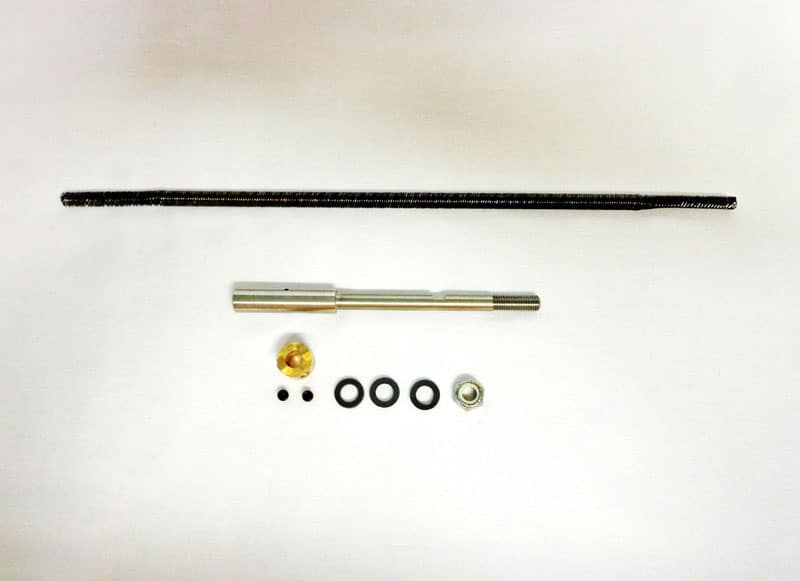
Cables wear. Square-end cables in particular will develop flats and stress marks at the coupler end after heavy running. If you’re seeing vibration that wasn’t there before, or if the boat is pulling to one side at speed, the drive cable is your first suspect. Inspect the full length for kinks, fraying, and corrosion spots — especially anywhere the flex tube was kinked during installation. If you find any damage, replace the full assembly. Splicing or running a borderline cable for one more race session isn’t worth the risk of a failure at wide-open throttle. Enforcer stocks complete drive cables, quarter flex cables, shaft ferrules, and double-square-end cables ready to ship, so downtime doesn’t have to stretch past a day if you order early.
First-Time Build? Do It Right From the Start
If you’re building a new hull, the drive cable decision point comes before you bond anything permanently. Choose the right cable diameter and length for your hull size and engine, dry-fit everything with the strut in place, and confirm the geometry is clean before the epoxy comes out. It’s ten minutes of checking that prevents hours of troubleshooting later. Builders running Zenoah G260 and G290 setups should also confirm the coupler interface is matched — mismatched square ends are a surprisingly common source of vibration on otherwise well-built boats.
Ready to Run Harder?
If your drive cable setup is due for a look — or you’re building fresh and want to get the geometry right from the start — browse the full selection at enforcerrcboats.com. Not sure which spec fits your hull and engine combo? Call the team at 317-844-4695. Running hard since 1983, and we still answer the phone.