

Your Engine Is Only Half the Story
A well-built Zenoah engine deserves the right exhaust. Run a tuned pipe that’s mismatched to your setup and you’re throwing away power — simple as that. The good news is that tuned pipe tuning isn’t black magic. It’s physics, and once you understand what’s happening inside that cone, you’ll make better decisions every time you’re trackside.
How a Tuned Pipe Actually Works
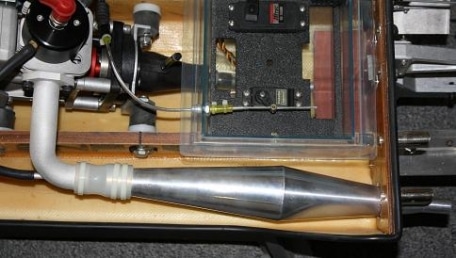
A tuned pipe isn’t just a muffler alternative. It’s a resonance device. When exhaust gases exit the cylinder, they generate a pressure wave that travels down the pipe, hits the cone, and reflects back. Timed correctly, that returning wave arrives at the exhaust port just as it’s about to close — pushing unburned mixture back into the cylinder before the port seals. The result is a supercharging effect that dramatically increases volumetric efficiency and power output. The operative word is “timed.” The length of the pipe — specifically the distance from the piston to the belly of the cone — determines at what RPM that resonance effect peaks. Too short and the powerband peaks too high. Too long and you’re lugging. Get it right and you’ll feel it the second you pin the throttle.
Length, Header, and Matching Your RPM Range
Pipe length is the primary tuning variable. For a Zenoah G260 or G290 running a sport mono or hydro, you want the pipe tuned to your typical WOT RPM range — usually somewhere between 9,000 and 13,000 RPM depending on your prop pitch and load. If you’re running a larger pitch prop and pulling high loads, a longer pipe will serve you better. Swinging a smaller pitch for oval racing? Shorten it up and move the powerband higher. The header — the straight section between the engine and the cone — matters too. Diameter affects exhaust velocity. Too large and you lose scavenging efficiency. The header diameter should match the exhaust port, with a modest step up at most. And don’t overlook the stinger — the outlet tube at the tail of the pipe. Restrict it too much and you kill top-end. Go too wide and you lose backpressure through the mid-range. This is where on-water experimentation pays real dividends.
Heat Wrap, Mounting, and On-Water Reality
A tuned pipe runs hot. In a closed RC boat hull, heat buildup is a real concern — it can cook fuel lines, warp mounts, and throw off your carb tune. Wrap the header with quality heat wrap and route your pipe away from fuel and electrical components. Mount it rigidly — vibration-induced flex will kill welds over time. Once you’re on the water, listen. A well-tuned pipe sounds crisp and purposeful at WOT. If you’re getting a flat, buzzy note at peak RPM, you’re either overpropped or the pipe isn’t in its resonance window. Drop a pitch on the prop and retest before you start cutting headers.
Ready to Run Harder?
Enforcer carries tuned pipes and exhaust components matched to the Zenoah engines we’ve been selling and supporting since 1983. Not sure which pipe is right for your hull and engine combo? Call us at 317-844-4695 — we’ll sort it out fast. Or browse the full exhaust lineup at enforcerrcboats.com.